Thane’s June–September humidity, damp walls, window-side rain, plumbing leaks and floor-level water expose weak kitchen construction quickly. By the end, you will know which materials, cabinet details, storage zones and acceptance checks make a kitchen more resilient—and when a premium modular specification is worth choosing over a conventional site-built one.
Key takeaways
- Keep indoor humidity below 60% and repair seepage before installing cabinets.
- Choose marine-grade plywood or HDHMR only with sealed edges and tested laminates.
- Raise base cabinets, seal sink zones and avoid unprotected MDF near water.
- Compare warranties, site protection and repair access—not just the kitchen quotation.
What does Thane’s monsoon do to a kitchen?
Humidity, seepage and daily water exposure attack kitchen cabinets from different directions. Thane’s June–September monsoon keeps indoor air damp, while wet footwear, mop water and open windows add repeated surface moisture. Humidity above 60% increases mould risk; EPA guidance places the ideal indoor range at 30%–50%.
A laminate face does not make a cabinet waterproof. Water enters through raw panel edges, screw holes, sink cut-outs, countertop joints, plumbing openings and the cabinet’s bottom edge. Swollen boards can jam shutters, loosen hinges and split laminates.
Damp external walls create another hazard: sealing tall units tightly against seepage traps moisture behind them, encouraging mould and stale odours.
| Monsoon exposure | Likely damage | What the design must prevent |
|---|---|---|
| Water under the sink | Swelling, mould and foul odours | Sealed cut-outs, leak access and a moisture-resistant sink cabinet |
| Mop water or minor flooding | Ruined cabinet bottoms and corroded hardware | Adjustable legs and a sealed, raised plinth |
| Damp external walls | Mould behind tall units and appliances | Corrected seepage, ventilation space and inspection access |
| Humid air and poor airflow | Condensation, pest activity and lingering odours | Exhaust ventilation, cross-ventilation and prompt drying |
A monsoon kitchen design in Thane should therefore keep untreated board off the floor, seal plinth joints with waterproof detailing and leave service access around pipes. After installation, inspect the sink underside, cabinet bottoms, panel edges, plumbing penetrations and rear of tall units; these hidden points expose poor workmanship before damage spreads.
Which materials withstand moisture without pretending to be waterproof?
Compare the core and its exposed edges, not the showroom finish. BWP plywood tolerates moisture better than MR plywood or particle board, but no board is waterproof after prolonged wetting. These are practical comparisons for modular kitchen materials in Thane:
| Option | Moisture behaviour | Sensible use or check |
|---|---|---|
| BWP or marine-grade plywood | Stronger moisture tolerance; can still swell, delaminate or grow mould | Specify grade and thickness; seal cut edges |
| MR plywood | Handles limited indoor humidity, not repeated leaks | Keep away from sink bases and wet plinths |
| MDF | Smooth and consistent, but raw edges swell quickly | Use only with factory edge-banding and dry placement |
| HDF | Denser than MDF, yet vulnerable at cut edges | Confirm sealed machining and avoid standing water |
| Particle board | Economical, but highly exposed edges swell after wetting | Reject for unprotected sink cabinets |
| PVC board | Does not absorb water like wood; can flex or weaken at fixings | Check thickness, load rating and joint quality |
| Laminate | Protects the face, not holes, joints or edges | Seal sink cut-outs, screw holes and bottom edges |
| Veneer | Thin natural-wood surface; moisture reaches the substrate through damage | Use sealed edges and a protected plywood core |
| Acrylic | Non-porous decorative face; the board beneath still matters | Inspect joints, corners and substrate specification |
| Aluminium or stainless steel | Excellent for wet zones; aluminium can dent, stainless steel can corrode | Ask for alloy or steel grade; 304 is common, 316 suits chloride exposure |
Premium modular kitchens in Thane should include sealed edges, silicone around cut-outs and an elevated, dry plinth. Inspect the sink underside, cabinet bottoms and plumbing penetrations after installation; these hidden areas expose poor workmanship. A “water-resistant” label alone proves little.
Which cabinet details protect the kitchen’s vulnerable zones?
Premium detailing matters most at the edges, joints and service gaps, not on the decorative door. In monsoon kitchen design in Thane, specify protection where splashes, condensation or hidden leaks reach the cabinet core.
| Zone | Specify | Why it matters |
|---|---|---|
| Sink cabinet | Sealed pipe penetrations, silicone around the sink cut-out, a removable base and access to the trap and flexible hoses | An inaccessible leak can swell the cabinet before you notice it |
| Plinth | Raised cabinet base, waterproof skirting and sealed plinth joints | Floor water cannot wick into the bottom edge |
| Tall units | A ventilation gap and inspection clearance behind the unit | A damp wall or trapped condensation can create mould |
| Corners | Removable panels or serviceable corner hardware | Hidden leaks and dampness remain reachable |
| Appliances | Sealed countertop cut-outs, protected cable openings and ventilation around heat-producing appliances | Water and trapped heat damage raw edges |
| External walls | Correct seepage first, then retain an air gap behind cabinetry | Fully sealing a wet wall traps moisture |
| Plumbing shafts | Sealed penetrations with removable access panels | Repairs do not require dismantling the kitchen |
Before accepting the installation, inspect the underside of the sink, cabinet bottoms, plinth joints, panel edges, countertop cut-outs, plumbing penetrations and the rear of tall units. Laminate cannot protect an exposed cut edge or screw hole. Ask the installer to demonstrate how you can reach the trap, hoses and shaft connections.
How should you compare premium modular and site-built kitchens?
Choose a modular kitchen when you need repeatable construction, sealed factory-finished edges, removable panels and predictable service access during Thane’s wet season.
Premium modular kitchens for monsoon in Thane are a better choice when on-site cutting would expose raw board edges or when a leaking sink, trap or appliance connection must be repaired without demolishing cabinetry.
| Option | Moisture control | Repair access | Better fit |
|---|---|---|---|
| Premium modular | Factory-cut panels, edge banding and specified moisture-resistant cores reduce exposed edges | Removable shutters, panels and service units simplify drying and repairs | Apartments where installation quality and future access matter |
| Site-built cabinetry | Quality depends on every cut, joint, screw hole and seal made at your home | Repairs can require dismantling fixed carcasses | Projects with an excellent carpenter and simple, fully inspectable construction |
| Either option | Neither is waterproof; laminate cannot protect raw cut-outs or swollen cores | Access depends on the design, not the label | Choose only after checking materials, seals and clearances |
Inspect the installation before signing acceptance. Premium modular kitchens in Thane still fail if the sink cabinet traps an inaccessible leak or a tall unit seals a damp external wall against its back.
- Look under the sink for sealed pipe penetrations, a leak-resistant sink joint, a removable base and access to the trap and flexible hoses.
- Check cabinet bottoms, plinth joints, panel edges and countertop cut-outs for swelling, gaps or unsealed board.
- Inspect the rear of tall units and appliances for ventilation space; correct wall seepage before closing it in.
- Ask Radiant Kitchen Studio to record the core material, edge treatment and service-access points on the handover checklist.
Related product
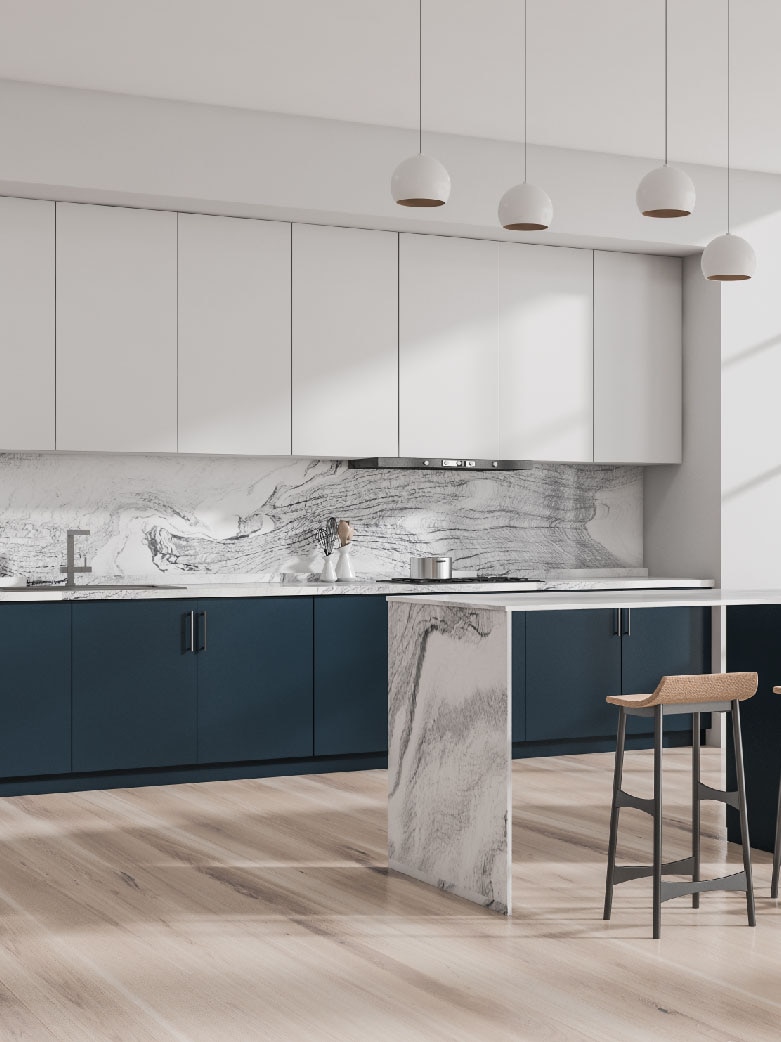 | Modular Kitchen Radiant Kitchen Studio in Thane specializes in designing stylish, modern, and functional modular kitchens tailored to the unique requirements of... View product → |
What maintenance keeps a monsoon-ready kitchen dry?
Keep indoor relative humidity below 60%, ideally between 30% and 50%, by running the chimney or exhaust fan while cooking and for 15–20 minutes afterward. Open windows for cross-ventilation when outdoor air is dry, and wipe splashes before water reaches laminate joints, exposed edges or the plinth.
Use this monthly monsoon checklist:
- Cleaning: Dry the sink cabinet, countertop cut-outs, floor-level skirting and appliance edges. Remove crumbs and standing water to discourage mould and cockroaches.
- Ventilation: Leave space around tall units and appliances, and periodically open cabinets on damp external walls. Do not trap moisture against seepage.
- Plumbing: Check the trap, flexible hoses, tap connections and drain joints under the sink. A slow drip can swell a base panel before it becomes visible.
- Seals: Inspect silicone around the sink, backsplash, countertop joints and plumbing penetrations. Replace cracked, loose or blackened sealant.
After installation, inspect hidden areas rather than relying on a showroom finish.
| Location | Check | Failure sign |
|---|---|---|
| Sink cabinet | Base, corners and removable panel | Swelling, odour or pooled water |
| Plinth | Joints and floor contact | Dampness, corrosion or pest entry |
| Tall unit rear | Ventilation gap and wall | Condensation or mould |
| Cut-outs | Sealed panel edges | Darkened board or lifting laminate |
Premium modular kitchens for monsoon in thane still need this routine. Repair wall seepage before cabinetry is fitted; an inaccessible leak will defeat even expensive materials.
Frequently asked questions
What does Thane’s monsoon do to a kitchen?
June–September humidity, seepage, mop water and open windows expose cabinets to swelling, mould and damaged finishes. Keep indoor humidity between 30% and 50% where possible, and address leaks before installation.
Which materials withstand moisture without being waterproof?
Marine-grade plywood and HDHMR resist moisture better than standard MDF, but neither is waterproof. Protect every cut edge with appropriate edging or sealant, and use a moisture-resistant laminate or finish.
Which cabinet details protect a kitchen’s vulnerable zones?
Raise cabinets above the floor, seal sink-base joints, protect exposed edges, provide ventilation, and use hardware that remains accessible for drying and repairs.
How should you compare premium modular and site-built kitchens?
Compare the substrate, edge sealing, installation tolerances, plumbing access, warranty coverage, site protection and repair process instead of comparing only the quoted price.
What maintenance keeps a monsoon-ready kitchen dry?
Wipe standing water immediately, inspect sink plumbing and wall seepage, keep cabinet interiors ventilated, clean mould-prone areas, and check edge bands and sealant after the monsoon.
Keywords